
Mysterious ghost-inhabited hills, a long abandoned shrine, the headstone for a man who claimed to have lived more than 130 years, a transportation device disguised as a giant potty chair and a 20th century American castle – built by hand.
Welcome to Central Florida’s Polk County, where there is no shortage of things to do, from theme parks and golf courses to restaurants, shopping and dining. Take a day to visit and you’ll quickly realize that this is where the real Florida magic happens.
But for those times when you feel like visiting life just a jot off the beaten path – with a side of ghoul – you’ll find there is plenty of roadside Florida left.
Spook Hill
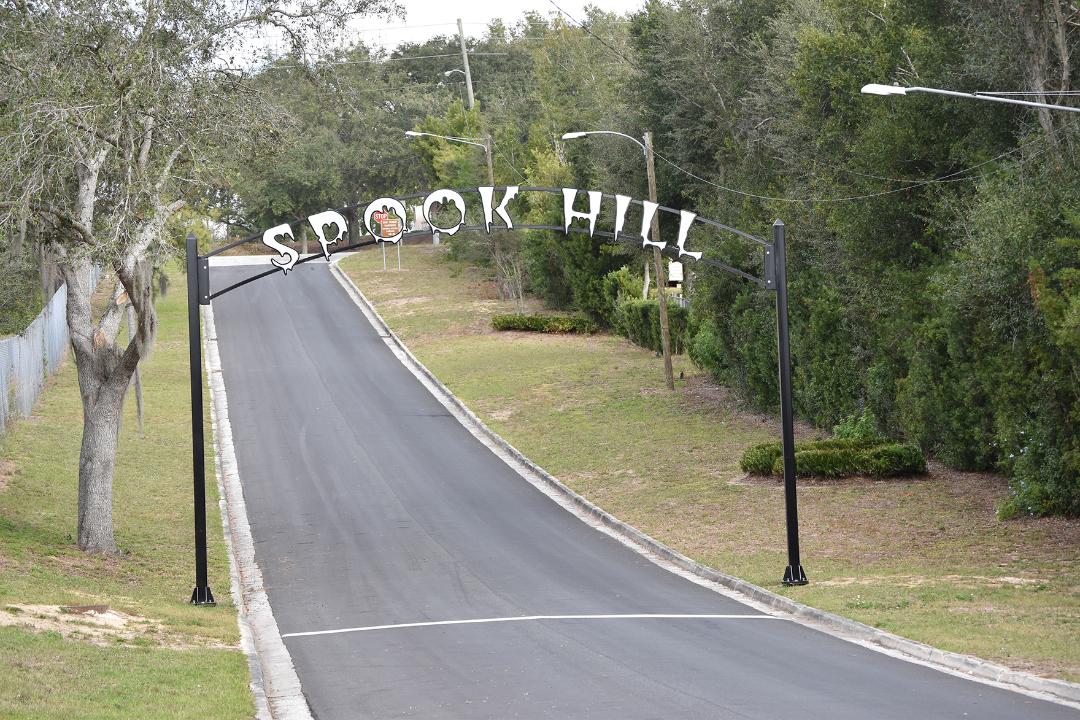
The mystery of Spook Hill – where your car rolls up hill – has baffled visitors for generations. According to Native American legend, the hill is a result of a battle between a giant alligator and a chief. As the area developed, riders on horseback would notice their steeds laboring along what appeared to be a downhill portion of the old trail.
But the location truly came into its own with the advent of the automobile – when drivers realized their cars would seemingly defy gravity and roll uphill.
A favorite of both locals and tourists for generations, Spook Hill is part of a phenomenon known as mystery hills or gravity hills and the only one of its kind in Florida. And after you are done rolling up hill, those in the know stick around and watch the reaction of others. That’s at least half the fun.
And worth the side trip – and social media hits – drive around the corner to take a picture at Spook Hill Elementary, a school with the familiar friendly ghost mascot – Casper – on the sign out front.
Shrine of St. Anne des Lacs
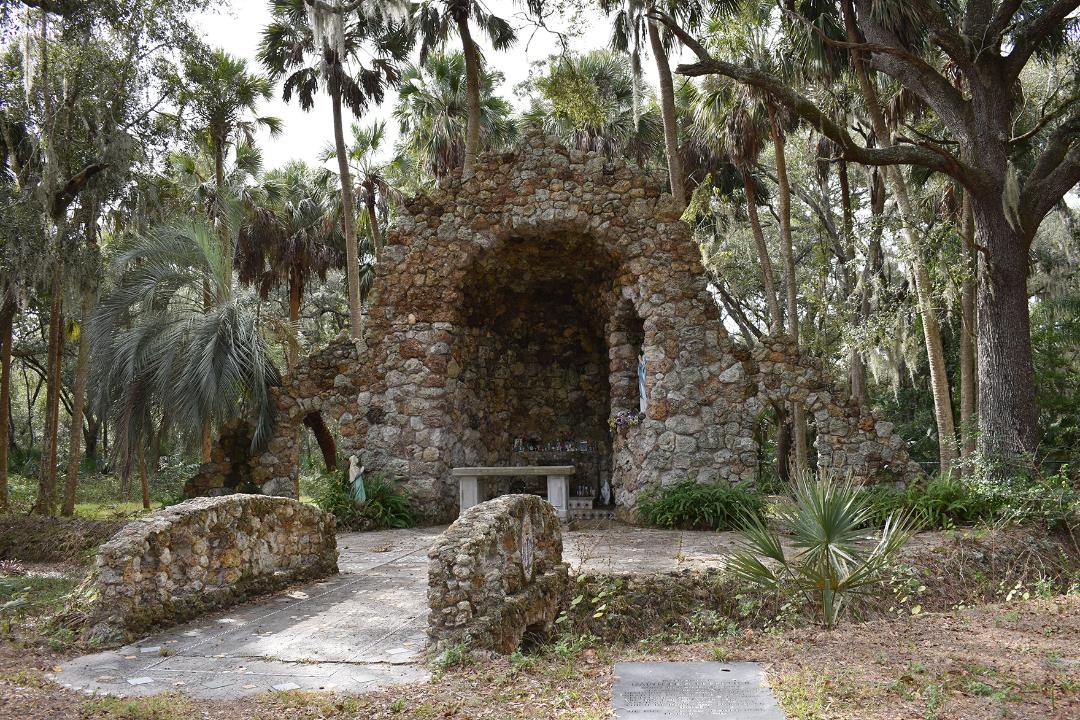
Just minutes from Spook Hill is a one-of-a-kind Central Florida religious site. Built circa 1920 on the shores of Lake Saint Anne by wintering French-speaking Canadian Catholics, today, ruins are all that remain of the Shrine of St. Anne des Lacs, composed of rarely used native Florida rock.
Famed French artist Francis Marsollier visited the site with his family and, when his son appeared to be cleansed of tuberculosis after a dip in Lake Anne, dedicated years to the church. Not only did he paint murals within the chapel, he chiseled elaborate statues for the church and on the grounds.
As word of the miracle spread, crowds gathered. Pilgrimages from Canada to Lake Wales began in 1928. Soon, thousands flocked to swim in the healing waters and visit the church. However, World War II disturbed the annual pilgrimages. By the 1960s the church was barely visited. The Diocese of St. Augustine de-sanctified the shrine, and most of what was inside was removed to prevent vandalism.
Today, not much more than a few sections remain. Believers still visit and leave items of individual spiritual significance behind in the walls of the grotto-like area, as well as along the rock bridge leading up to it and a fountain nearby. Other areas composed of rock, as well as the tiles that made up the floors, also remain, as well as other stone-built structures.
From slave to outlaw, the world’s oldest man…or not
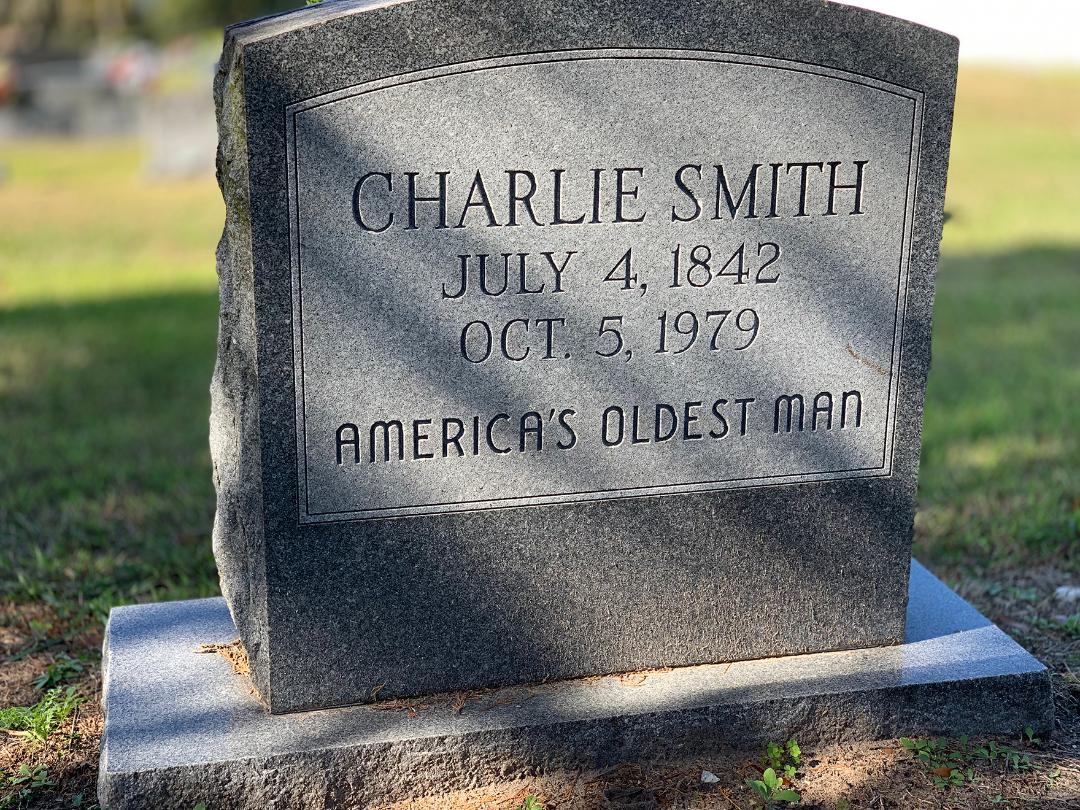
In 1980, upon the passing of Charlie Smith, the eyes of the world turned to Bartow. Smith, you see, had been lured to the United States from Liberia, Africa, sold into slavery, and once rode with Jesse James.
Or not.
At his passing at the young age of 137, he was the city’s most famous resident. His death was noted in the New York Times, The Washington Post, both Time and Newsweek magazines and numerous news publications around the world.
For decades, Smith enchanted the world with tales of his life as the oldest living American. From Liberia he claimed he was sold into slavery on the streets of New Orleans to Captain Smith, who may or may not have been a Texas farmer. After adopting the last name, he earned his freedom on his 21st birthday when the Emancipation Proclamation was signed. He then joined the Union Army, went out West to work as a ranch hand, worked as a bounty hunter, rode with Jesse James, chased notorious outlaw Billy the Kid – and even ran off with the circus. He claimed to be the oldest person ever – and the last surviving Union veteran of the American Civil War.
Or so he claimed.
Discovered in 1955 after a Polk County grove owner asked him to get a Social Security card – and he put his age down as 113 – Smith’s true age remains unknown. Today, interviews with Smith, recorded in the years before his death, abound on the Internet and YouTube. A celebrity during the later years of his life, he was invited to view the launch of Apollo 17 in 1972 at the Kennedy Space Center (youtube link if you want it: here). There was even a PBS television show created about his life, “Charlie Smith and the Fritter Tree,” which was rebroadcast on the early days of the Disney Channel.
Three years after he passed, the city of Bartow purchased a tombstone for their unlikeliest celebrity. You can find it in Wildwood Cemetery, row 28. If you stop by, it is the second headstone from the wall and near a large tree.
The HOHO Chair
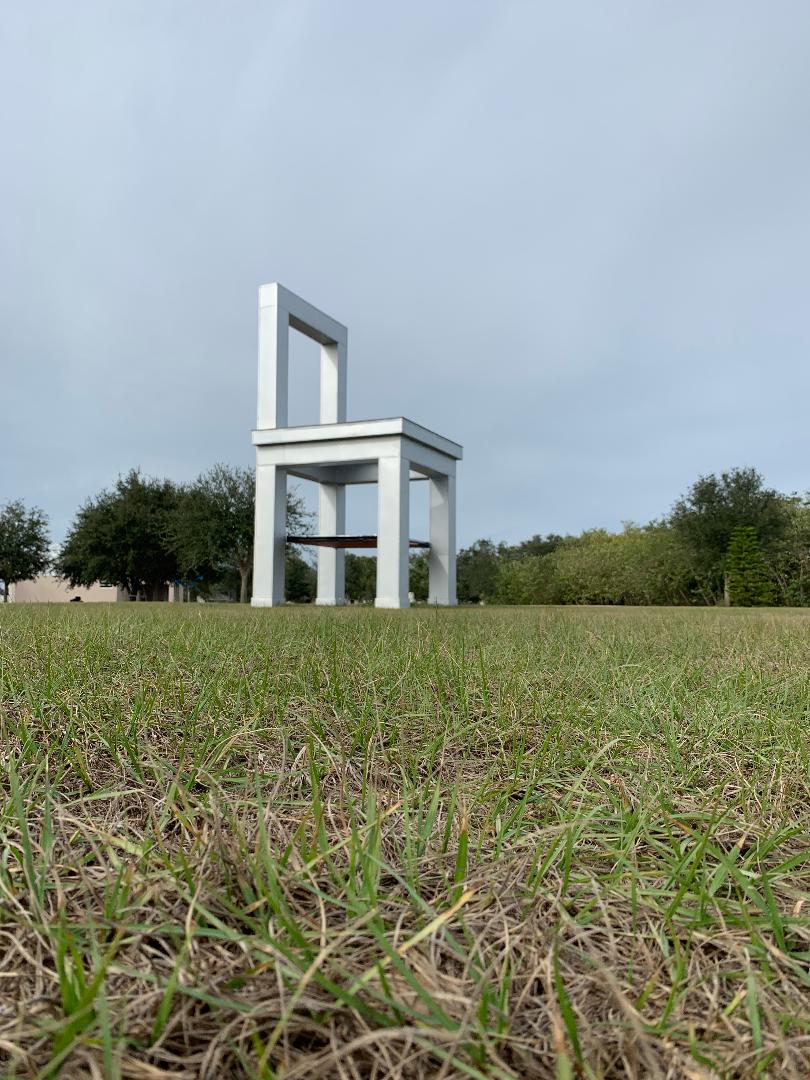
Rising above the homes that surround it is a gateway to the Philadelphia Museum of Art. Or a giant potty chair. Is it art? That is, as they say, in the eye of the beholder.
Either way, it is the brainchild of modern artist Steven Chayt. Built in the backyard of his home along Old Thornhill Road in Winter Haven, the 24-foot-high sculpture, dubbed the “HOHO Chair,” pays homage to famed French painter, sculptor and writer Marcel Duchamp, whose works leaned into the avant-garde movements of Cubism and Dadaism. In fact, the coordinates on the bottom of the chair, along with the words, “Put Your Trust There,” and even the direction the chair faces all point to Duchamp’s permanent installation at the Philadelphia Museum of Art. Underneath the opening in the chair is a picture of clown with an opening where the mouth would be – or the opening of a wormhole.
Pay a visit to the artist’s website, www.stevenchayt.com, where he even created a short movie to show what traveling via the wormhole would be like.
Chayt’s work – mostly digitally manipulated images printed on stretched canvas – has been exhibited throughout the United States. If you do stop by the chair, realize that the art installation is in the artist’s backyard in a residential neighborhood – so please be respectful.
A House of Wonders
If you’ve watched the Netflix original series “Amazing Interiors,” you may have seen the feature on Bartow’s historic Wonder House. The brainchild of Conrad Schuck, a contractor and quarry owner from the Pittsburgh area who moved his family to Florida after a doctor gave him a year to live. While the Wonder House may have started as Schuck’s final project – never mind that he lived for an additional 50 years – the build morphed into a near continuous tourist attraction. Tours of his four-story concrete over stone mansion – reinforced with steel railroad rails – remained popular for years.
Opened to tourists in 1934, innovations for the times included cooling the home by both multidirectional cross drafts and rainwater channeled through hollow, cement walls. Interior walls, decorated with glass, tile, hand carvings and mosaics, added to the aura. Other innovations included pathways of mirrors deep inside the home that allowed residents to see who was at the front door, built in flower boxes, entire cabinets rotating on lazy susans, concreate bridges crossing swimming pools and expertly kept grounds added to the theme of the great “American castle.”
A showman at heart, Schuck – who never lived in the Wonder House – filled the building with oddities that fascinated tourists, including jarred snakes and taxidermy. However, the next owners turned the Wonder House into a residence, and following owners were not as kind. After years of disrepair, the house was purchased, and numerous floors of the building restored, by a young couple who have kept true to Schuck’s vision.
The Wonder House is a cash-only business. Weekend tours are open to the public and must be booked in advance. Holiday tours, especially Halloween, quickly sell out.
No matter what you have in mind as you visit The Sunshine State, a visit to Florida would be incomplete without a visit to Central Florida’s Polk County, where the real Florida magic happens. Go to www.VisitCentralFlorida.org to plan your vacation in Central Florida’s Polk County.